Georgios Aravanis
PhD Student · Cycle 39
Supervised by Claudio Sbarufatti
Research
Georgios (Giorgos)’s research focuses on probabilistic methods for Structural Health Monitoring (SHM), with emphasis on Bayesian modeling, Probabilistic Machine Learning, uncertainty quantification, and knowledge sharing across fleets of engineering systems.
Open thesis topics
- SHMFleet MonitoringMachine LearningFatigue & FractureExperimentalSWARM
Population-Based SHM for Fatigue Damage Identification
This thesis focuses on the experimental validation of Population-Based Structural Health Monitoring (PBSHM) through fatigue crack propagation tests on a fleet of instrumented aluminum plates. The activity is designed from a fleet perspective, where multiple nominally identical specimens are tested under controlled conditions, with thickness as the only varying parameter to induce a structured domain shift. Each plate is equipped with a distributed network of strain sensors to monitor crack growth under cyclic loading. The objective is to develop and validate data-driven models capable of detecting damage, estimating structural health, and transferring knowledge across structurally related domains. Particular emphasis is placed on uncertainty quantification and cross-domain generalization. The work provides a controlled benchmark for assessing PBSHM capabilities before extending the methodology to more complex and realistic systems.
Details and apply - SHMFleet MonitoringMachine LearningExperimentalSWARM
Vibration-Based Fleet Monitoring under Structural and Environmental Variability
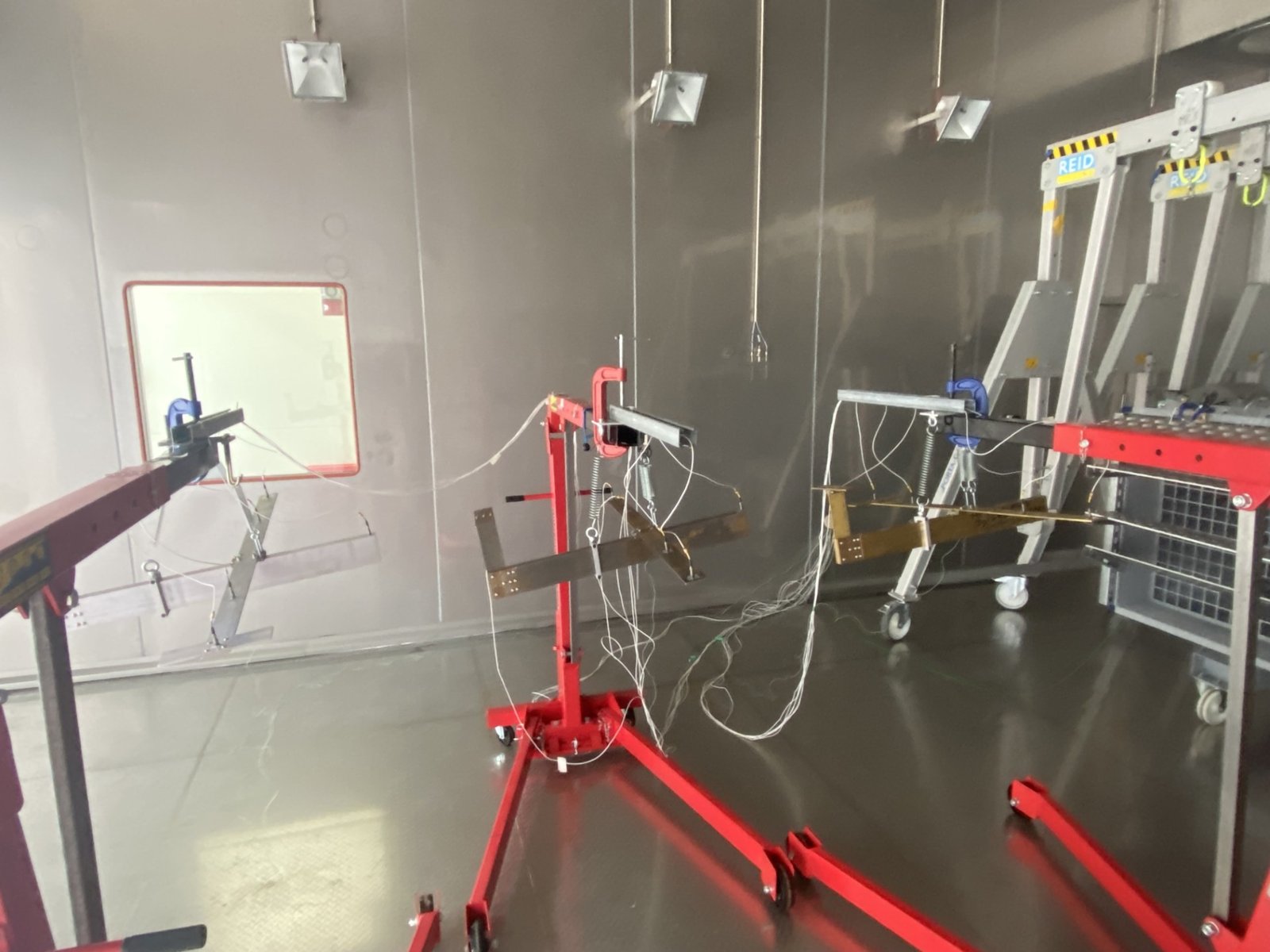
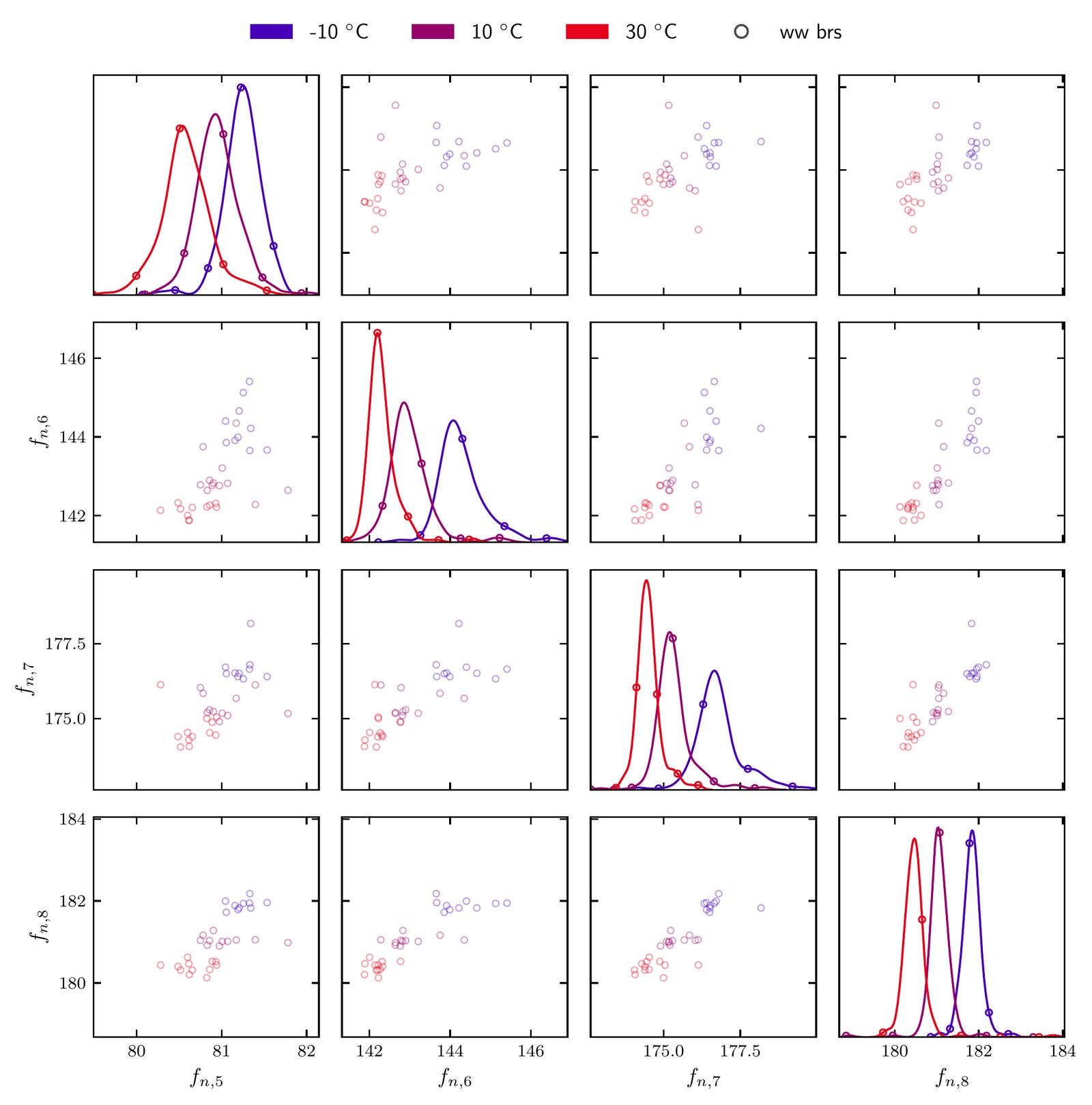
This thesis investigates vibration-based Population-Based Structural Health Monitoring (PBSHM) on a fleet of simplified aircraft-like structures. The systems share a common layout but differ in material, scale, or topology, introducing controlled heterogeneity. Each structure is instrumented with a limited number of accelerometers to reflect realistic sensing constraints. The experimental campaign includes dynamic testing, progressive damage introduction (mass addition, joint loosening), and systematic environmental variability (temperature and wind). The objective is to develop methods capable of distinguishing damage from operational and environmental effects, while enabling knowledge transfer across heterogeneous structures. The work provides a realistic intermediate validation step toward full-scale UAV applications.
Details and apply - SHMFleet MonitoringSensingUAVSWARM
Telemetry-Enhanced Fleet Monitoring for UAV Structural Health
This thesis investigates Population-Based Structural Health Monitoring (PBSHM) on a fleet of real quadrotor UAVs by combining onboard telemetry with additional sensors (e.g. accelerometers) integrated within payload constraints. The monitoring strategy leverages flight data together with selectively deployed sensing to enhance sensitivity to structural changes.
Details and apply - SHMFleet MonitoringMachine LearningWind Turbines
Population-Based Monitoring for Wind Turbine Structural Health
This thesis investigates Population-Based Structural Health Monitoring (PBSHM) applied to wind turbines using publicly available datasets from the literature. The activity focuses on fleets of turbines operating under varying environmental and operational conditions, exploiting signals such as vibration, SCADA, or load measurements.
Details and apply
Research in images