Skip to content
Politecnico di Milano, SIGMA Lab
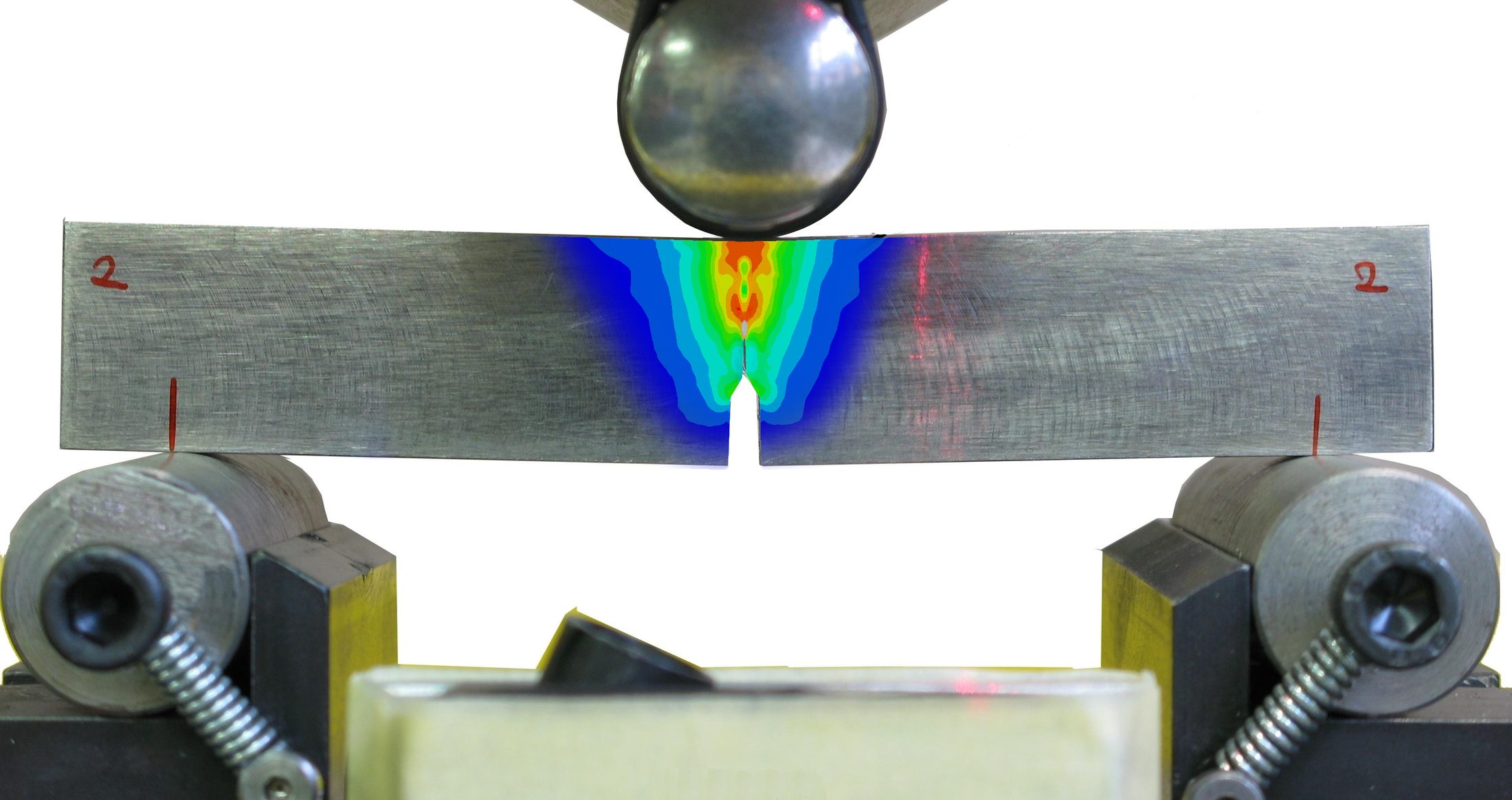
Three-point bend test on a notched metallic specimen, with a digital image correlation strain field overlaid at the notch

Department of Mechanical Engineering · Politecnico di Milano

Structural Integrity,
Health Monitoring
& Prognosis

Advanced engineering for the assessment, design and optimisation of mechanical and aerospace components — from material calibration to full-scale testing and AI-driven prognosis.

Research areas
5
Projects since 2009
30
Researchers
28
Open thesis topics
55
Selected papers
32

Research

Research areas

Hover, focus or tap an area to open it.

How materials and structures behave when loading becomes nonlinear and severe — large deformation, fracture, impact and blast. The programme runs from material calibration on coupons through to full-scale experimental validation, pairing every test with an analytical or numerical model so that protection can be designed predictively rather than by trial.

Explore the area
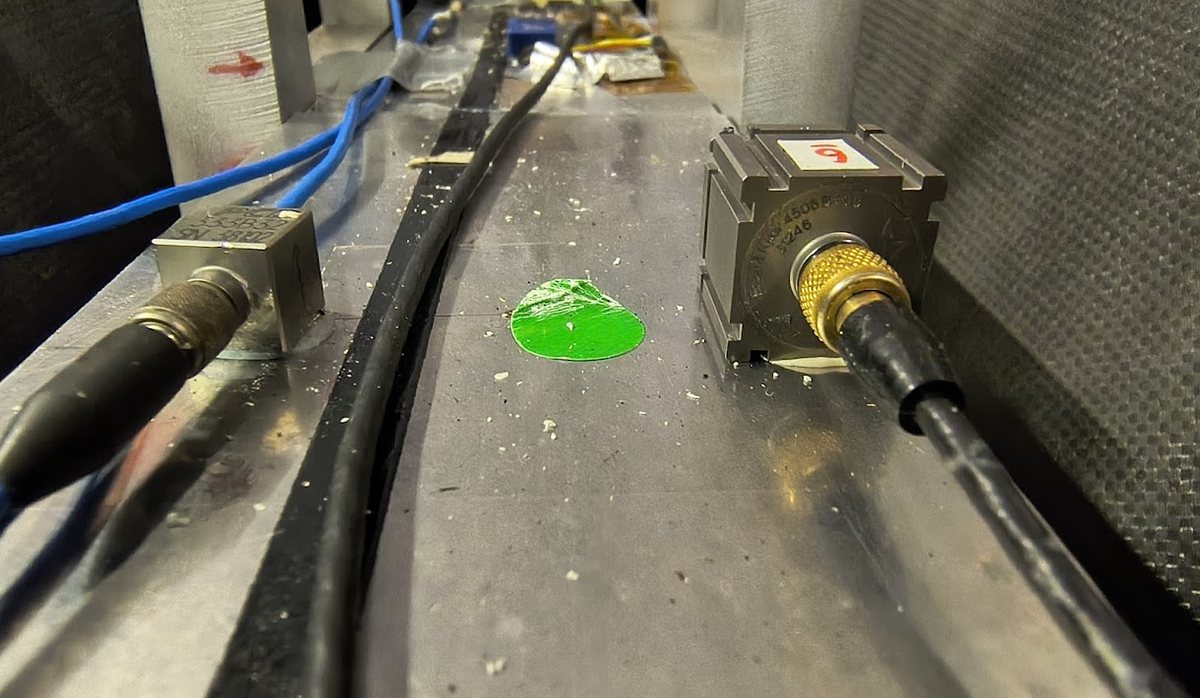
Detecting, locating and sizing damage from sensor networks installed on operating structures, then predicting how much life remains. Sensors give a signal that depends on damage; numerical models supply the simulated experience needed to interpret that signal. The goal is safer operation at lower maintenance cost.

Explore the area

A digital twin is a set of models, both physics-based and data-driven, that update themselves in real time and follow the life of the physical system they represent. It must carry information about how degradation develops, and run fast enough to keep up with operation. The programme builds twins at component, platform and fleet level.

Explore the area

Modern systems are interconnected, multiphysical and heavily instrumented, and the signals they produce are too complex for hand-built features. Deep learning handles that, but labelled data for damaged conditions is scarce and black-box predictions are hard to trust. The programme works on both problems: embedding physics to cut the data requirement, and making predictions explainable.

Explore the area

How architected materials can be designed to achieve tailored responses under dynamic loading and to control elastic-wave propagation. The research combines computational modeling, experiments, and machine learning to develop metamaterials for impact mitigation, programmable mechanical behavior, and tunable wave manipulation.

Explore the area

Projects

30 projects since 2009

Projects coordinated or joined by SIGMA Lab, funded by the European Defence Agency, the European Defence Fund, Horizon 2020, the Italian Ministry of Defence, the Italian Space Agency and industry.

News

Latest news

May 2024 · Space

Favouring planetary space exploration exploiting digital twin and HUMS

The DIGES project nears completion: a digital twin of a lunar exploration rover, paired with a health and usage monitoring system that detects anomalies and supports mission continuity. The rover design borrows from NASA's Perseverance and ESA's Rosalind Franklin. Machine learning optimises the thermal system in real time, while the twin simulates battery short circuits, motor failures and solar panel degradation to test damage detection and Kalman-filter parameter updating. Coordinated by Marco Giglio and Francesco Cadini, funded by the Italian Space Agency.

Read the full article

October 2022 · European Defence Fund

dTHOR — Digital Ship Structural Health Monitoring

Selected in the 2021 European Defence Fund call, one of 61 projects sharing roughly €1.2 billion of EU support. dTHOR builds a ship structural health monitoring system from large volumes of load and response measurements, a digital framework built on recognised open standards for data exchange, and hybrid analysis combining physics-based and data-driven models. It targets damage assessment, structural integrity evaluation and a reduced hydro-acoustic signature. A 35-member consortium over 36 months; the Politecnico team is led by Giglio, Sbarufatti, Cadini and Manes.

Read the full article

September 2022 · European Defence Fund

COMMANDS — Convoy Operations with Manned-unManneD Systems

Also from the 2021 European Defence Fund results. COMMANDS develops through-life capabilities for agile, intelligent and cooperative manned and unmanned land systems, addressing how unmanned ground vehicles operate in unstructured environments where satellite signal is degraded or denied. The work includes a laboratory demonstrator and a mobile demonstrator built around a last-kilometre resupply convoy with force protection. A 21-member consortium over 36 months; the Politecnico contribution covers digital twins, AI algorithms and HUMS.

Read the full article

Thesis

55 open topics

Interested in a Master Thesis or PhD position? Contact Prof. Giglio to discuss open topics and research opportunities.